
Custom Body Measurements You May Want to Track
Choose useful custom measurements for clothing, training, mobility, or another personal routine without cluttering the dashboard.
Short answer
A custom measurement is useful when the built-in list does not match your purpose. Examples include inseam, sleeve length, a left and right limb recorded separately, or a sport-specific circumference. Name it clearly, choose one unit, and document how you measure it.
The longer answer
Custom measurements are not automatically better than standard ones. Their value comes from answering a specific question. Before adding one, decide what the number is for and whether you can take it the same way again. If the method is vague, the chart may reflect technique changes more than body changes.
Measurements for clothing fit
Inseam, sleeve length, torso length, and garment-specific circumferences can help keep sizing notes together.
Use the method required by the garment or pattern. A tailoring measurement may use different landmarks from a fitness measurement with a similar name.
- Inseam
- Sleeve length
- Torso length
- Garment-specific circumference
Separate left and right entries
The built-in list may treat an arm or thigh as one category. A custom entry can keep left and right values separate when that distinction matters to your routine.
Do not use small differences to diagnose an injury or imbalance. Bring concerns to an appropriate professional.
- Left upper arm and right upper arm
- Left thigh and right thigh
- Left calf and right calf
Keep the dashboard readable
Add only measurements that you plan to revisit. Clear names such as “Right thigh, 15 cm above knee” are easier to repeat than a generic label.
Archive the method outside the number if it requires several steps. A chart is only as comparable as the process behind each entry.
Using Body Measurement Tracker: Metr
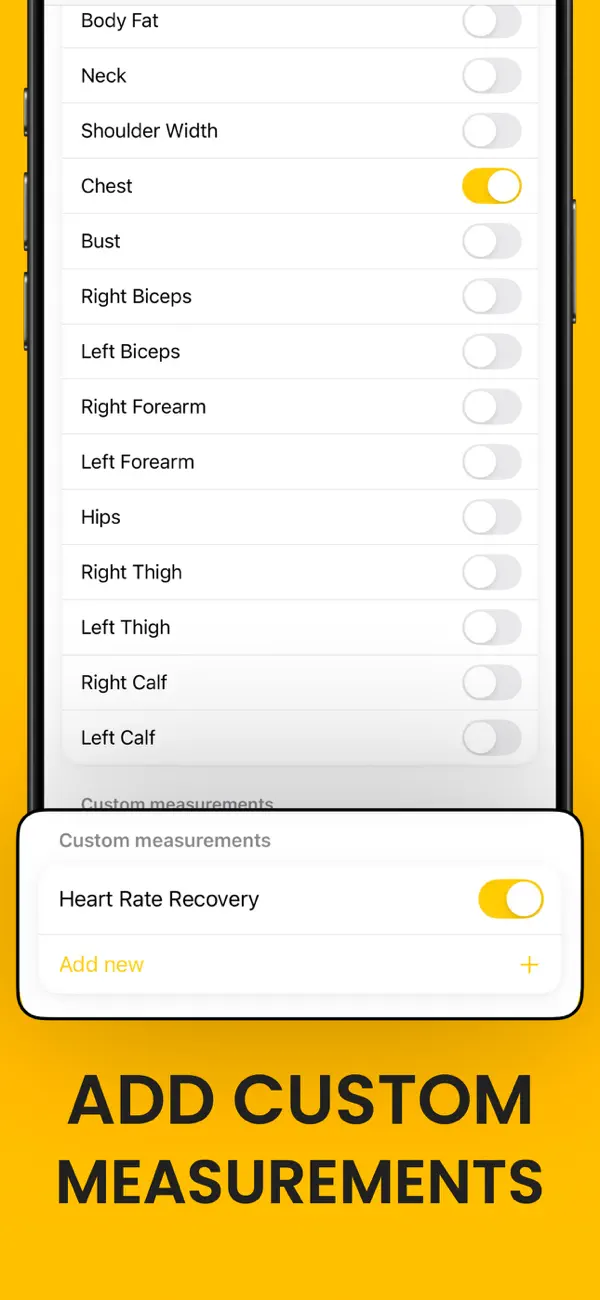
Create a custom entry in Metr
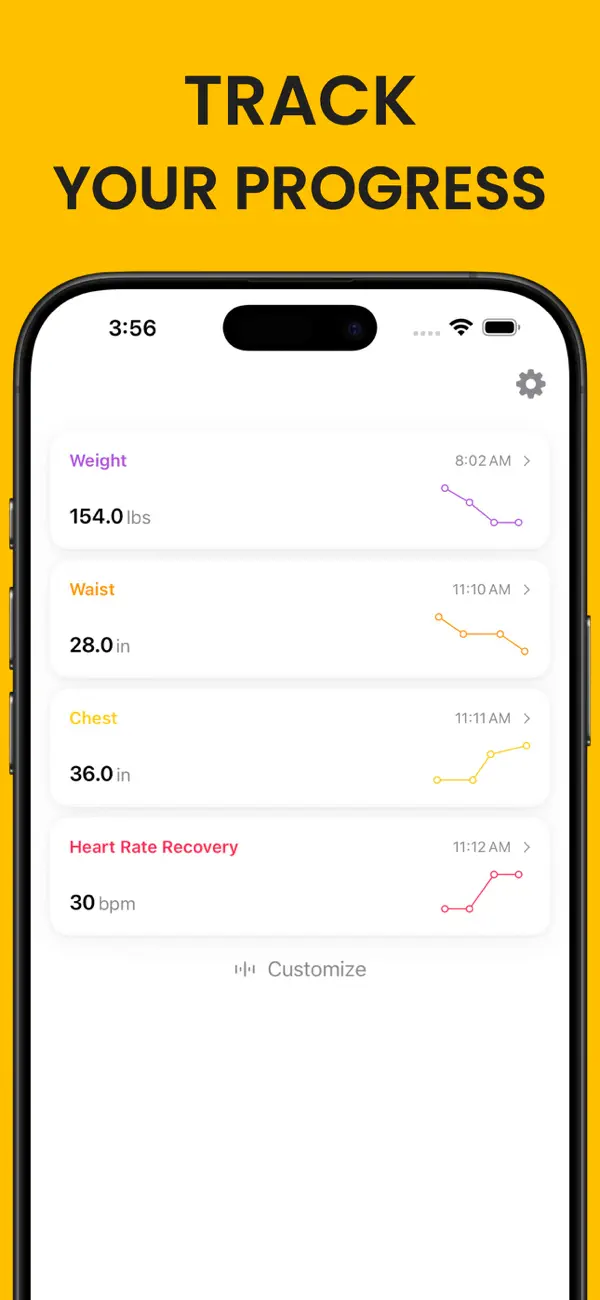
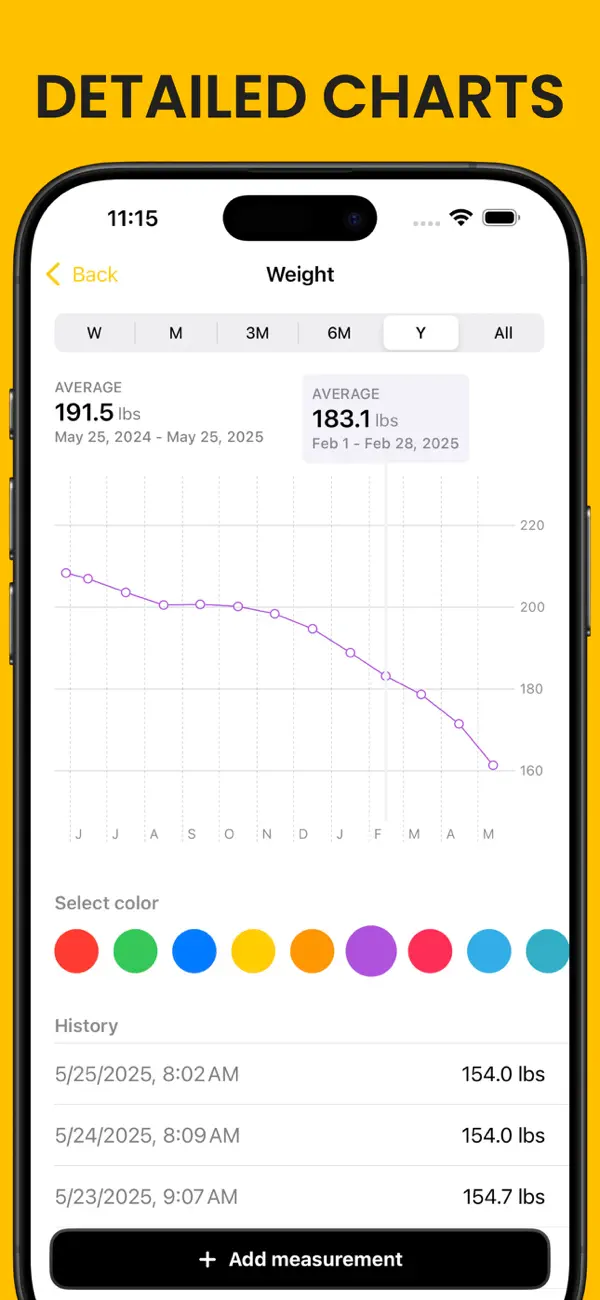
Metr lets you add custom measurements, assign colors, and arrange the dashboard around the values you use.
- Custom names
- Custom colors
- Reorderable dashboard
Add the one missing measurement that answers a real question for you.


FAQ
Questions about this topic
Can I choose any unit for a custom measurement?
Use the unit supported by your app and keep it consistent across entries.
Should I track both sides of the body?
Only if the distinction serves a clear purpose and you can measure both sides consistently.
How many custom measurements should I add?
As few as needed. A shorter dashboard is easier to maintain.
Keep reading
Related posts
How to Make a Body Measurement Tracking Schedule
Create a repeatable schedule for waist, chest, arms, hips, thighs, and other measurements without measuring too often.
Read post body measurement chart vs scale weightBody Measurement Chart vs Scale Weight
Compare what tape measurements and body weight can show, where each can mislead, and how to review them together.
Read post export body measurements to CSVHow to Export Body Measurements to CSV
Export a body measurement history to CSV, check the fields, and keep a portable copy for spreadsheets or personal records.
Read post