Comparison
Body Measurement Chart vs Scale Weight
Compare scale weight with a body measurement chart. Learn what each records, where technique matters, and how to review the same period together.
Updated 2 min read

Body Measurements Tracker is free to download.

Short answer
Scale weight measures total mass. A body measurement chart tracks circumference or another value at selected locations. Neither one directly proves fat loss or muscle gain, but viewing both over time can provide more context than relying on a single reading.
Your weight and waist chart can move in different directions. Before interpreting the difference, check what each entry measures and how it was taken. Keeping both records can add context without establishing what caused a change.
We make Body Measurements Tracker, which records both kinds of entries. A notebook or spreadsheet can also keep the numbers together.
What each record answers
| Record | What it measures | What it cannot establish alone |
|---|---|---|
| Scale weight | Total mass at a given time | Which tissue changed |
| Tape measurement | Size at a defined location | The cause of a change |
| Both over time | Two views of the same period | A diagnosis or guaranteed outcome |
What the scale records
A scale records total body weight at that moment. Food, hydration, clothing, and time of day can influence the reading.
A longer trend is easier to interpret than a single weigh-in. The number alone does not identify which tissue changed.
What a tape measurement records
A tape records circumference where it is placed. Waist, hips, chest, arms, and thighs can each move differently over time.
Small technique changes matter. Keep the position, posture, and tape tension as similar as possible.
If two readings seem inconsistent, first check dates, units, and method. For example, compare this month’s waist entries with this month’s weight entries, rather than a waist reading today with a weight average from last year.
How to use both without overreading them
Place weight and measurements on their own charts, then compare the same date range. Look for sustained movement rather than forcing each entry to agree.
Use the record for observation. Health interpretation and goal setting may require qualified guidance based on your circumstances.
Measurement method matters: a CDC methodology study compares several waist-measurement protocols. Keep one defined method in your record rather than mixing values taken at different landmarks.
Compare the same period in Body Measurements Tracker
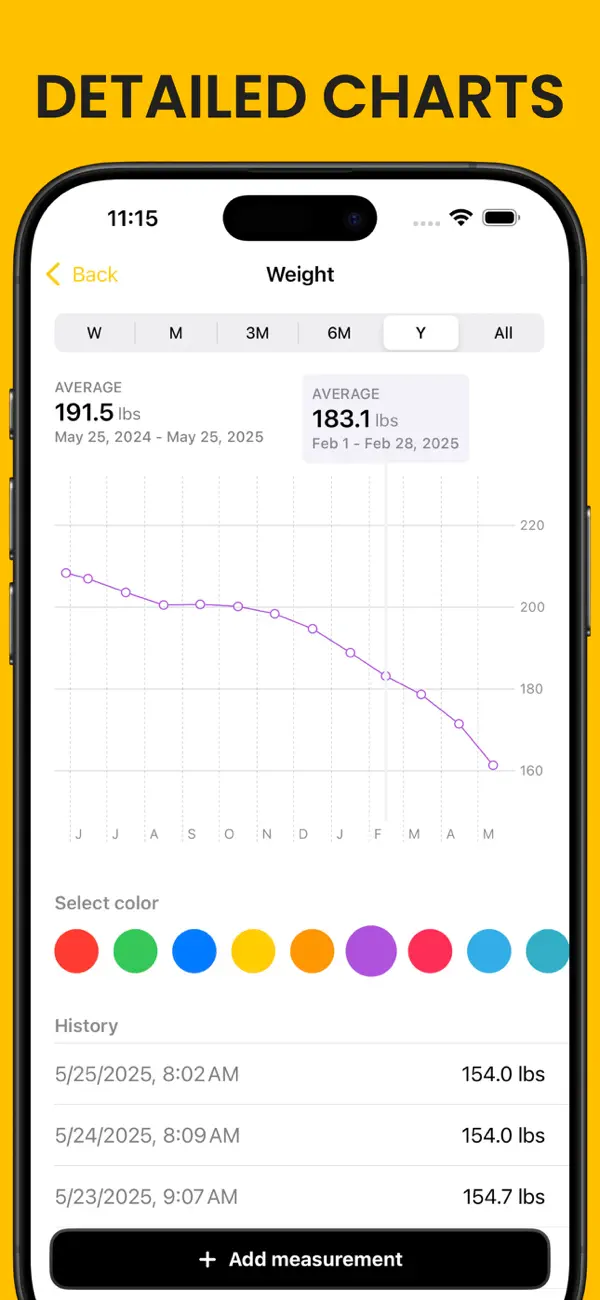
Body Measurements Tracker can chart weight and multiple body measurements over a shared date range. It records what you enter without interpreting the result as fat loss or muscle gain.
Related reading: How to Make a Body Measurement Tracking Schedule · Custom Body Measurements You May Want to Track · How to Export Body Measurements to CSV.