
Video Screenshot vs Frame Extraction on iPhone
Compare an iPhone video screenshot with a frame extracted from the source file, including resolution, controls, cropping, and export options.
Short answer
A screenshot records what your iPhone is displaying. Frame extraction saves an image from the video itself. Extraction usually gives you a cleaner file without playback controls, screen scaling, or manual cropping.
The longer answer
Both methods can produce a useful picture, but they start from different places. A screenshot is quick and works anywhere you can pause a video. Its output is limited to the image shown on the screen, though, and it may include controls or empty space. A frame extractor reads the selected image from the source video and saves it as its own file. That gives you control over the exact frame and export format, but it cannot create detail that the video never recorded.
What an iPhone screenshot captures
When you press the screenshot buttons, iOS records the current screen. The result can include the video player interface, letterboxing, or a frame scaled to fit the display.
This is often fine for a quick reference or message. It is less convenient when you want a photo to edit, print, archive, or reuse without cropping.
What frame extraction changes
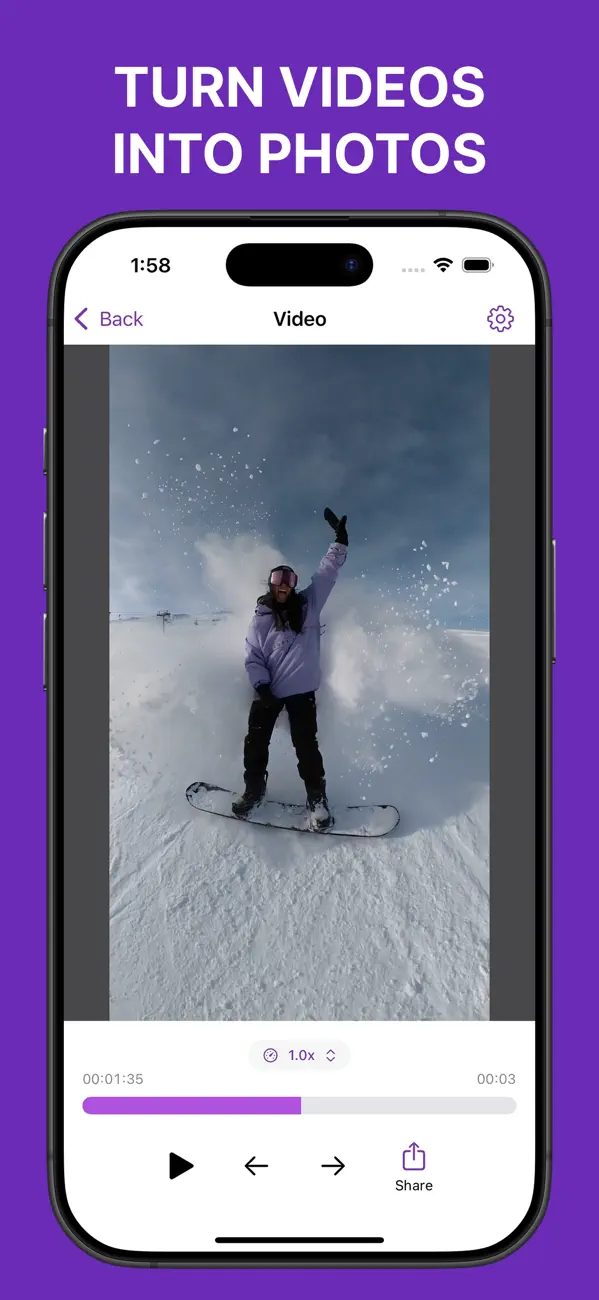
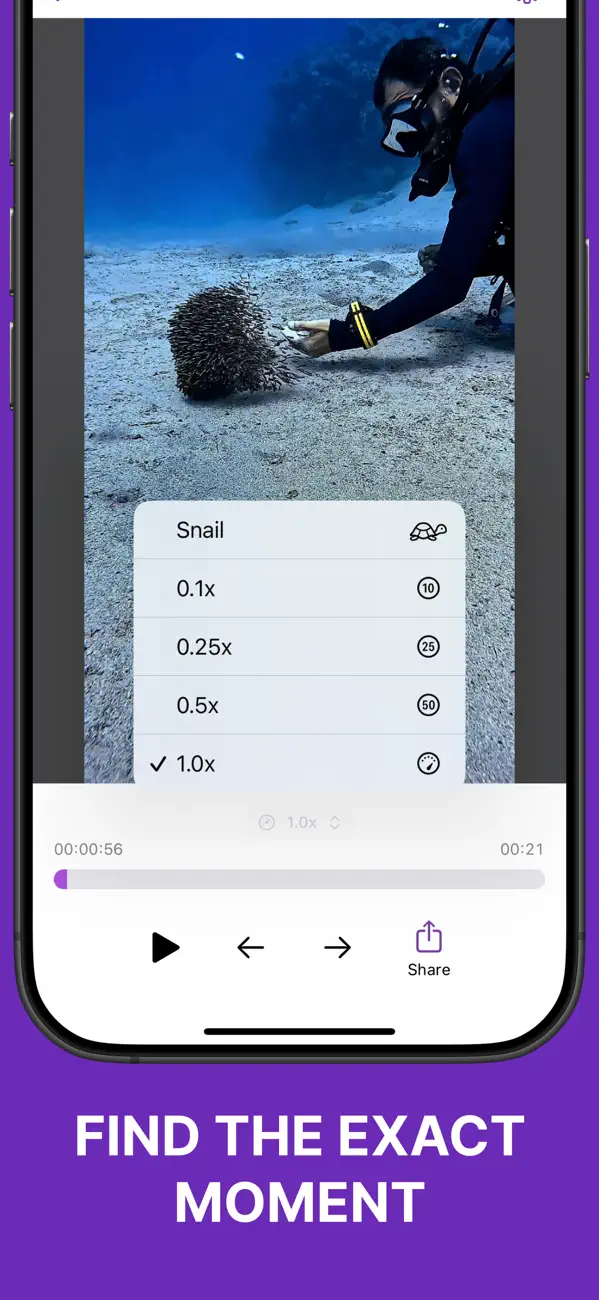
Frame extraction works with the video file rather than the screen. You choose a point in the timeline, refine the choice one frame at a time, and export that image.
The saved image still depends on the source. A frame from a 1080p video does not become a full-resolution camera photo just because it was extracted. Motion blur and compression remain part of the frame.
Which method should you use?
Use a screenshot when speed matters more than file quality or cleanup. Use extraction when you need an exact moment, a clean image, or a specific format.
Before exporting, check the nearby frames. The sharpest image is often a frame just before or after the moment that first caught your eye.
Using Frame Grabber
Extract a frame with Frame Grabber
Frame Grabber opens videos and Live Photos from your library, lets you move one frame at a time, and saves the selected image without uploading the source.
- JPEG, HEIF, and PNG export
- Adjustable JPEG and HEIF quality
- On-device processing
Open the video, find the frame, and save it as a separate photo.



FAQ
Questions about this topic
Is an extracted frame the same quality as a regular photo?
Not necessarily. Its quality is limited by the video resolution, compression, exposure, and motion blur.
Does frame extraction remove motion blur?
No. It saves the recorded frame as it is.
Will the original video change?
No. Saving a separate frame does not edit the source video.
Keep reading
Related posts
Best Video Resolution for Still Photos: 1080p vs 4K
Learn how 1080p and 4K video affect the size and usefulness of still frames saved as photos.
Read post JPEG vs HEIF vs PNG for video framesJPEG vs HEIF vs PNG for an Extracted Video Frame
Choose between JPEG, HEIF, and PNG when saving a still frame from an iPhone video.
Read post save Live Photo frame without changing originalHow to Save a Live Photo Frame Without Changing the Original
Browse the movement in a Live Photo and save another moment as a separate image while keeping the original intact.
Read post