
Fridge-Cold vs Room-Temperature Eggs for Boiling
Compare boiling times for cold and warmer eggs, plus safe ways to keep the starting method consistent.
Short answer
A fridge-cold egg generally needs more heating than an egg that has warmed toward room temperature, so it may need a little longer for the same centre. Food-safety guidance still applies, and eggs should not be left out longer than recommended locally.
The longer answer
Starting temperature matters most when you are aiming for a narrow texture such as a flowing or jammy yolk. A small timing difference can be visible there. For firm eggs, the safe cooking method and prompt cooling matter more than chasing a few seconds. Pick one starting condition and repeat it before making detailed adjustments.
Why the starting temperature matters
A colder egg begins farther from the temperatures at which the white and yolk set. Under the same cooking conditions, it takes more energy and usually more time to reach the same centre.
The difference is not universal because size, altitude, pot, and boil intensity also change the result.
Choose a repeatable routine
Using eggs straight from the fridge is easy to repeat. If you prefer warmer eggs, define how long they sit out and follow local food-safety limits.
Do not microwave a shell egg to warm it. Rapid heating can create pressure and cause it to burst.
Cool at the end
Move the egg into cold water when the timer ends. This slows carryover cooking and makes the timing easier to reproduce.
For a soft egg served warm, a short cool is enough to stop the centre moving quickly. Firm eggs can cool longer before storage or peeling.
Using egg timer: cute eggy
Tell eggy where the egg started
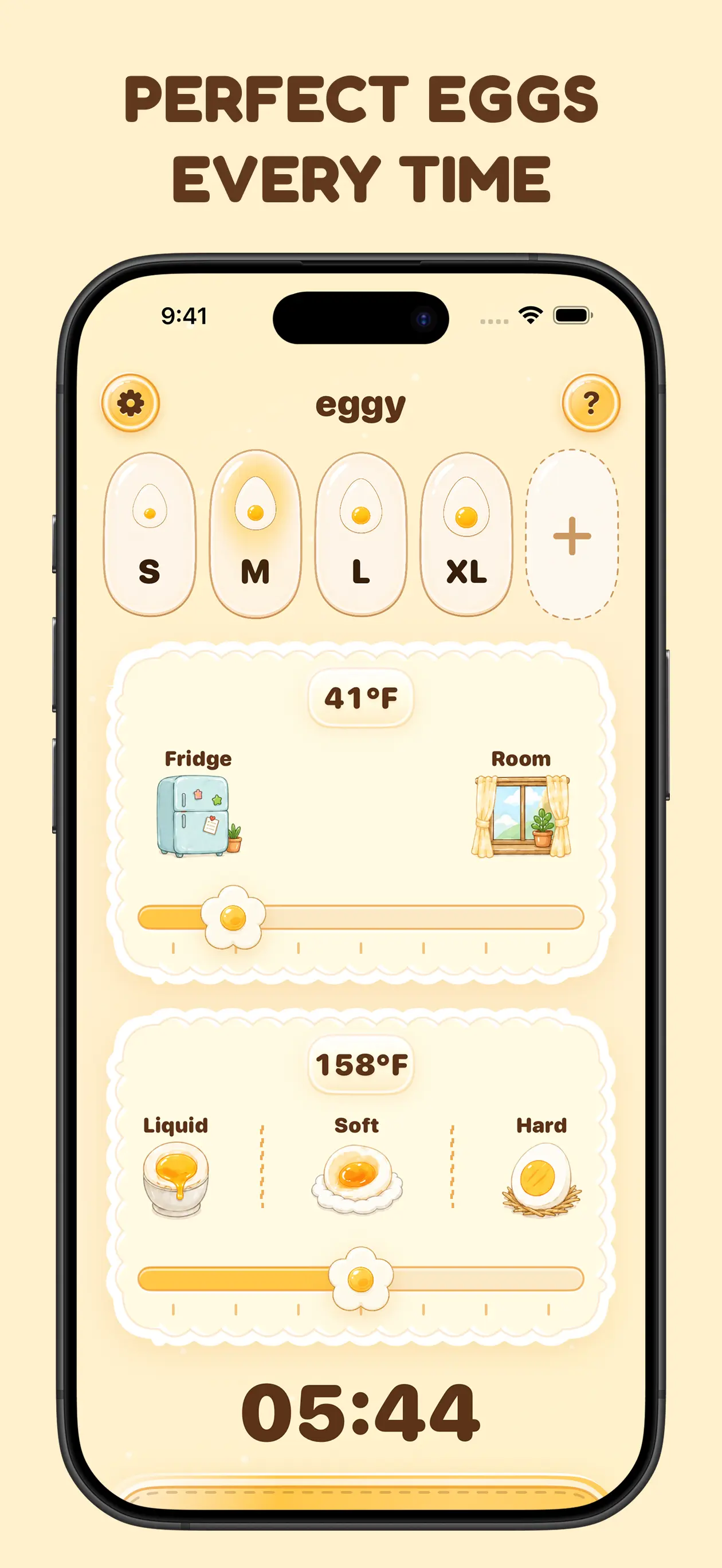
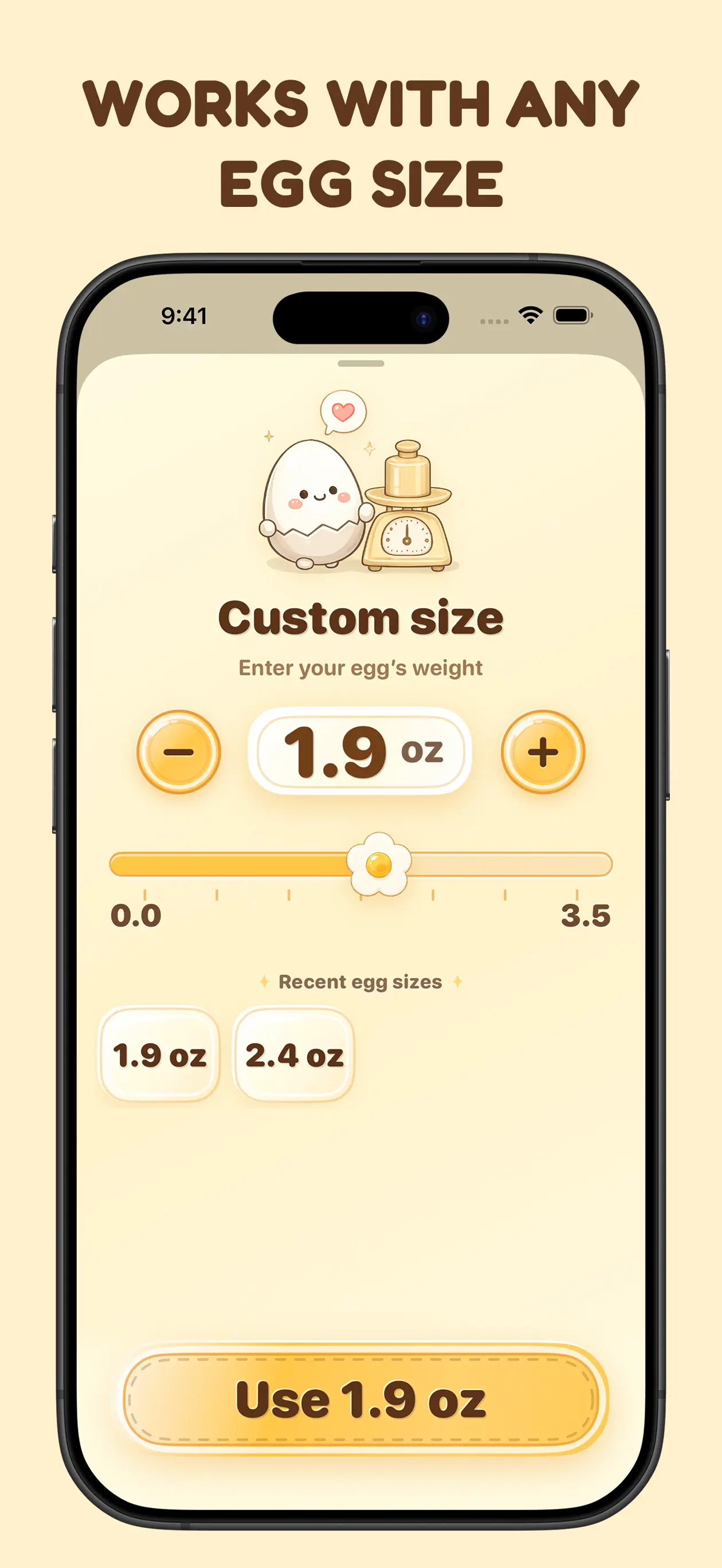
eggy includes a starting-temperature input alongside egg size or weight and yolk preference. It does not read temperature from a sensor.
- Cold and warmer starting points
- Manual selection
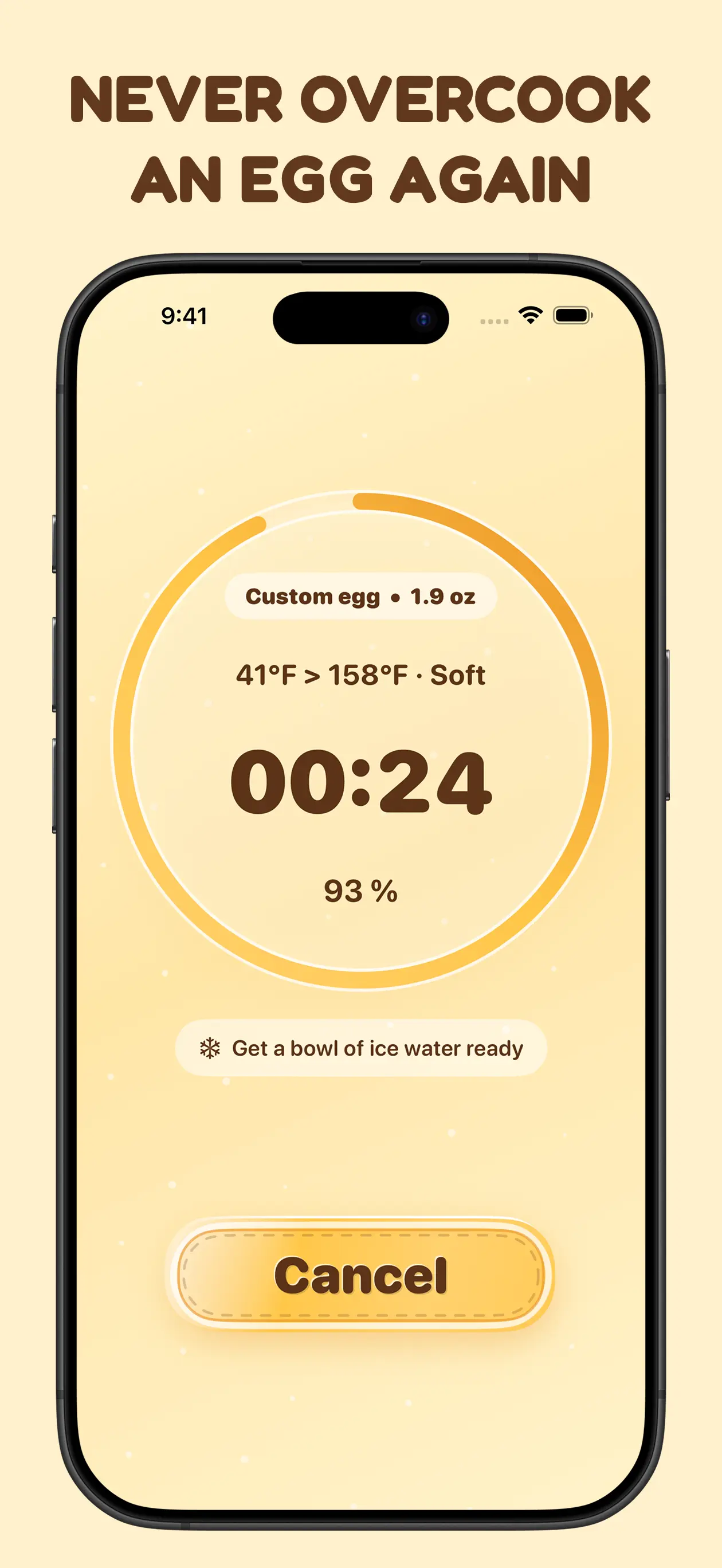
- Calculated countdown
Keep the starting temperature consistent before fine-tuning the time.


FAQ
Questions about this topic
Can I boil an egg straight from the fridge?
Yes. Use a timing method intended for a cold egg and lower it carefully to reduce cracking.
Will room-temperature eggs crack less?
Temperature difference can play a role, but shell condition, handling, and the intensity of the boil also matter.
How long can eggs sit out?
Follow the food-safety guidance for your country and storage system. Do not leave them out just to match a recipe without considering those limits.
Sources and further reading
Keep reading
Related posts
Does Egg Size Change Boiling Time?
Learn why small, medium, large, and extra-large eggs may need different boiling times and how to make a practical adjustment.
Read post egg timer on Apple WatchHow to Use an Egg Timer on Apple Watch
Start and follow a boiled egg timer from Apple Watch when your phone is across the kitchen or your hands are busy.
Read post boiled egg keeps cooking after timerWhy a Boiled Egg Keeps Cooking After the Timer
Understand carryover cooking in boiled eggs and use cold water to keep a soft or jammy yolk from becoming firm.
Read post