
Why a Boiled Egg Keeps Cooking After the Timer
Understand carryover cooking in boiled eggs and use cold water to keep a soft or jammy yolk from becoming firm.
Short answer
The egg remains hot after it leaves the pan, so heat continues moving toward the centre. Transfer it to cold or ice water as soon as the timer ends. If the yolk is still too firm, shorten the next cook slightly while keeping the rest of the method the same.
The longer answer
A timer marks when active cooking should stop, but it does not remove heat already stored in the shell, white, and yolk. That remaining heat can noticeably change a soft centre. Cooling is therefore part of the method, not an optional step added after the timing is complete.
Prepare the cooling water first
Fill a bowl with cold water before the egg goes into the pan. Add ice when you need a faster stop or are cooling firm eggs for storage.
Having the bowl ready removes the delay between the alarm and the transfer. A minute spent searching for ice can change a soft yolk.
Match the cooling time to the result
A soft egg served warm needs enough cooling to slow the centre and make handling comfortable. A firm egg can stay in cold water longer.
The exact cooling time depends on egg size, water temperature, and whether you plan to eat, peel, or refrigerate it.
Change one variable next time
If the egg remains too firm after prompt cooling, reduce the active boiling time in a small step. If the white is too loose, add a little time.
Keep the egg size, starting temperature, and cooking method stable while adjusting. Otherwise you will not know which change produced the new result.
Using egg timer: cute eggy
Use the alert as the cooling cue
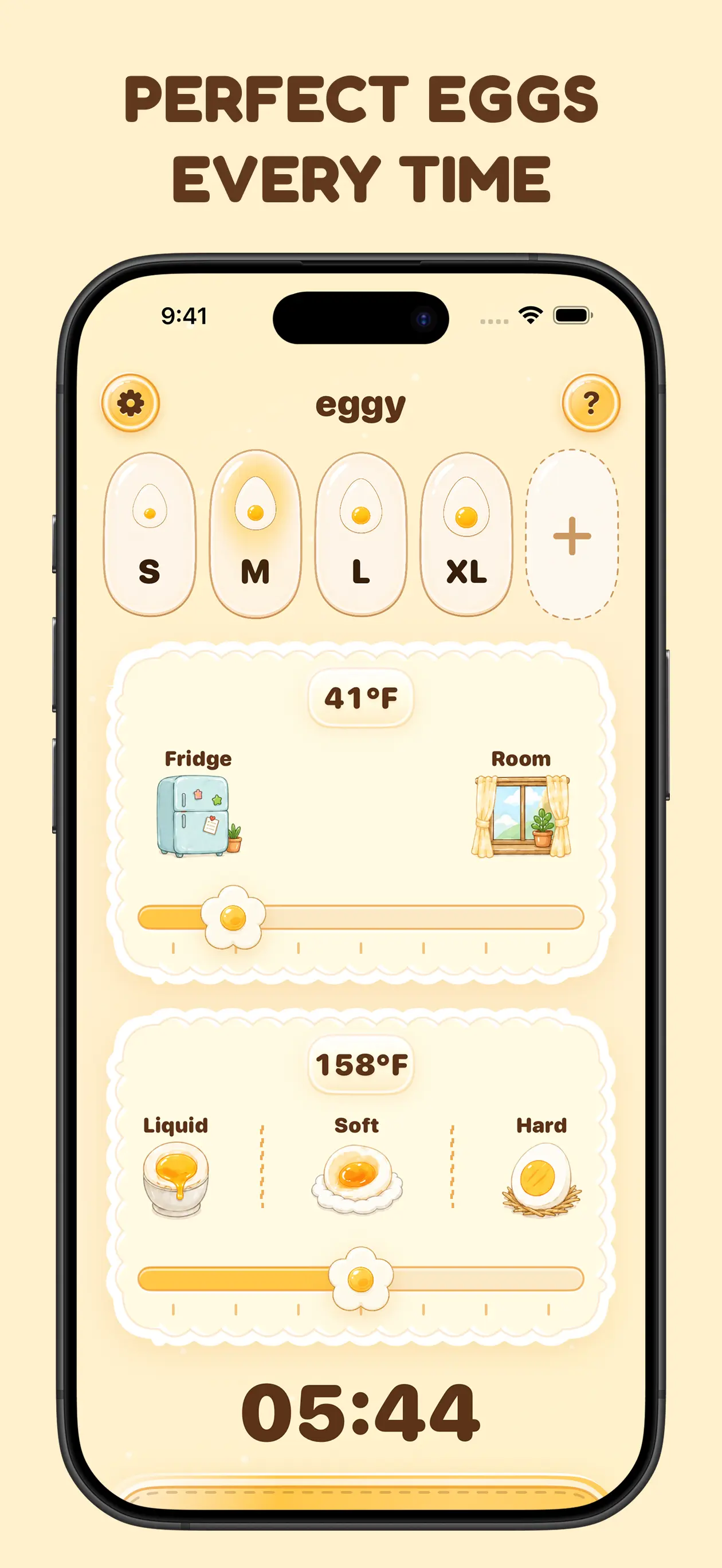
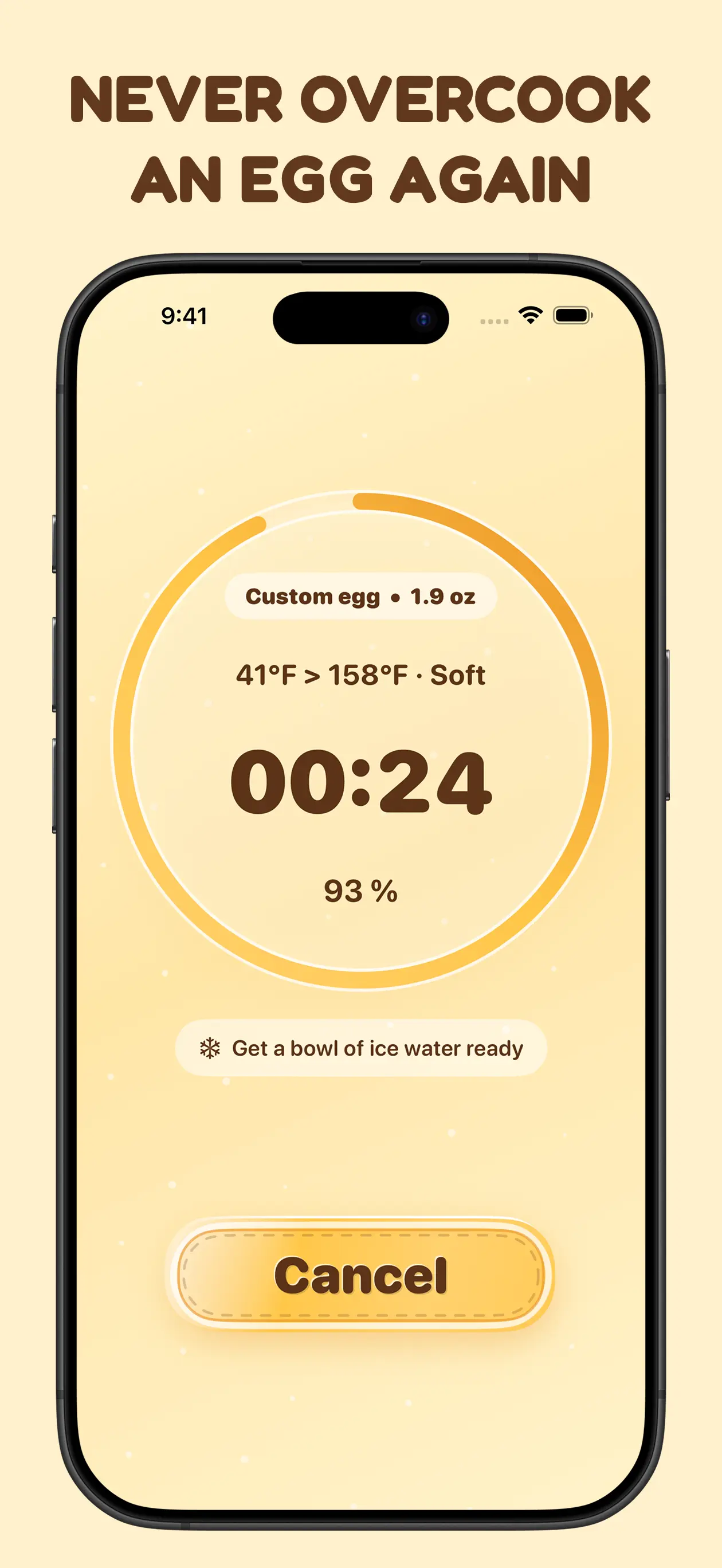
eggy calculates the active countdown and alerts you when it is time to remove the egg. It does not cool the egg or measure its internal temperature.
- Completion alert
- Live countdown
- Manual cold-water finish
Set up the cold water before you start the timer.


FAQ
Questions about this topic
Can cold tap water stop carryover cooking?
It can slow cooking. Ice water cools faster and is easier to keep cold when several hot eggs are added.
Why is the outside of a yolk firmer than the centre?
Heat moves inward from the hot water, so the outer layers reach a higher temperature first.
Does eggy account for the cold-water step?
eggy alerts you when the active countdown ends. You still need to move the egg into cold water.
Keep reading
Related posts
Does Egg Size Change Boiling Time?
Learn why small, medium, large, and extra-large eggs may need different boiling times and how to make a practical adjustment.
Read post fridge cold vs room temperature eggs boiling timeFridge-Cold vs Room-Temperature Eggs for Boiling
Compare boiling times for cold and warmer eggs, plus safe ways to keep the starting method consistent.
Read post egg timer on Apple WatchHow to Use an Egg Timer on Apple Watch
Start and follow a boiled egg timer from Apple Watch when your phone is across the kitchen or your hands are busy.
Read post