
What to Look for in a Caffeine Tracker
Choose a caffeine tracker by the drink log, the editable half-life and bedtime, on-device storage, and a clear line around what the app does not measure.
Short answer
Choose a caffeine tracker that logs specific servings, shows the half-life and bedtime behind its estimate, and stores the log on your phone if you want to skip an account. Look elsewhere if you need sleep tracking, a watch app, barcode scanning, or a plan for quitting.
The longer answer
Most caffeine trackers add up drinks and draw a decay curve. That is enough when the job is a record and a bedtime estimate. It is the wrong product when you want sleep stages, automatic logging, or a taper. Before you install one, check the drink list, the assumptions you can edit, where the data lives, and which results the app refuses to promise.
The log has to match the drink you had
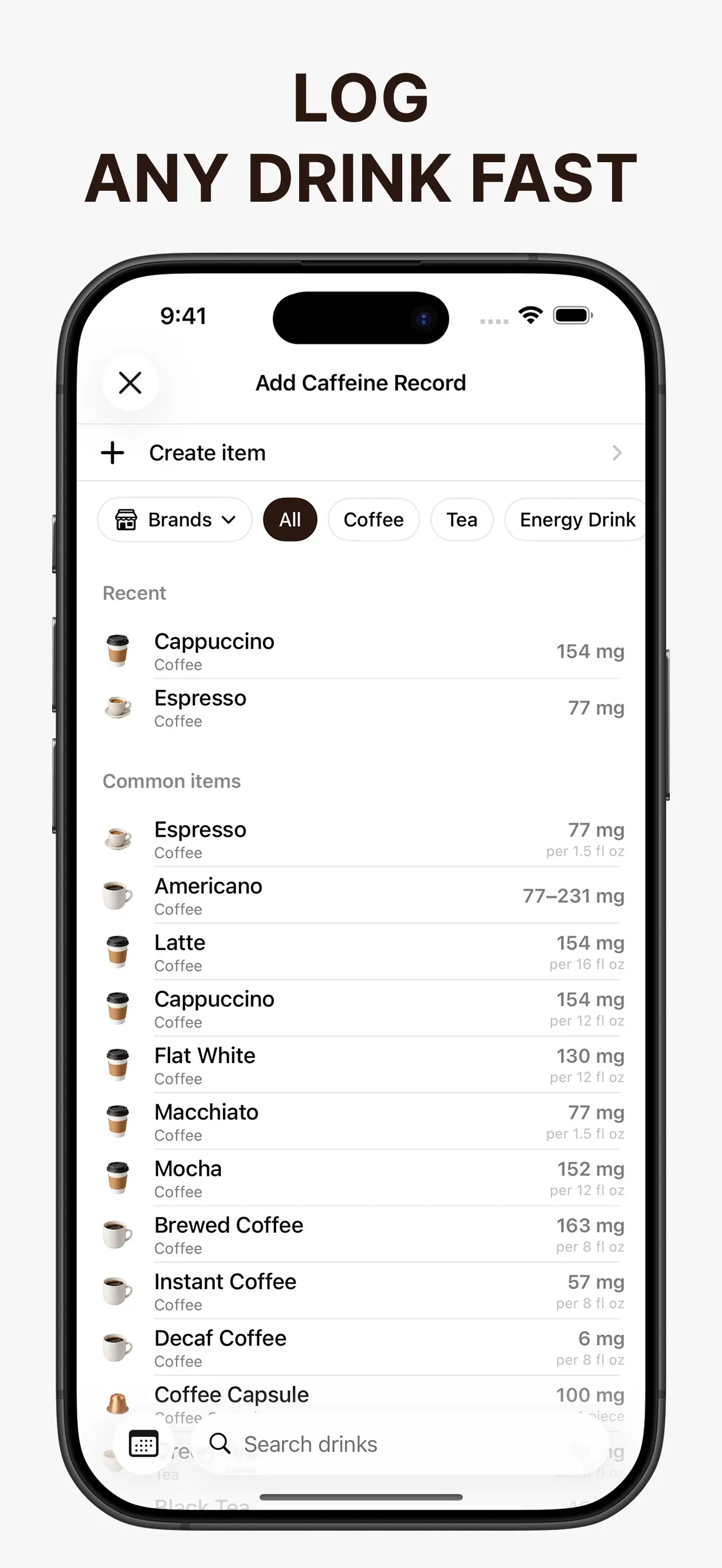
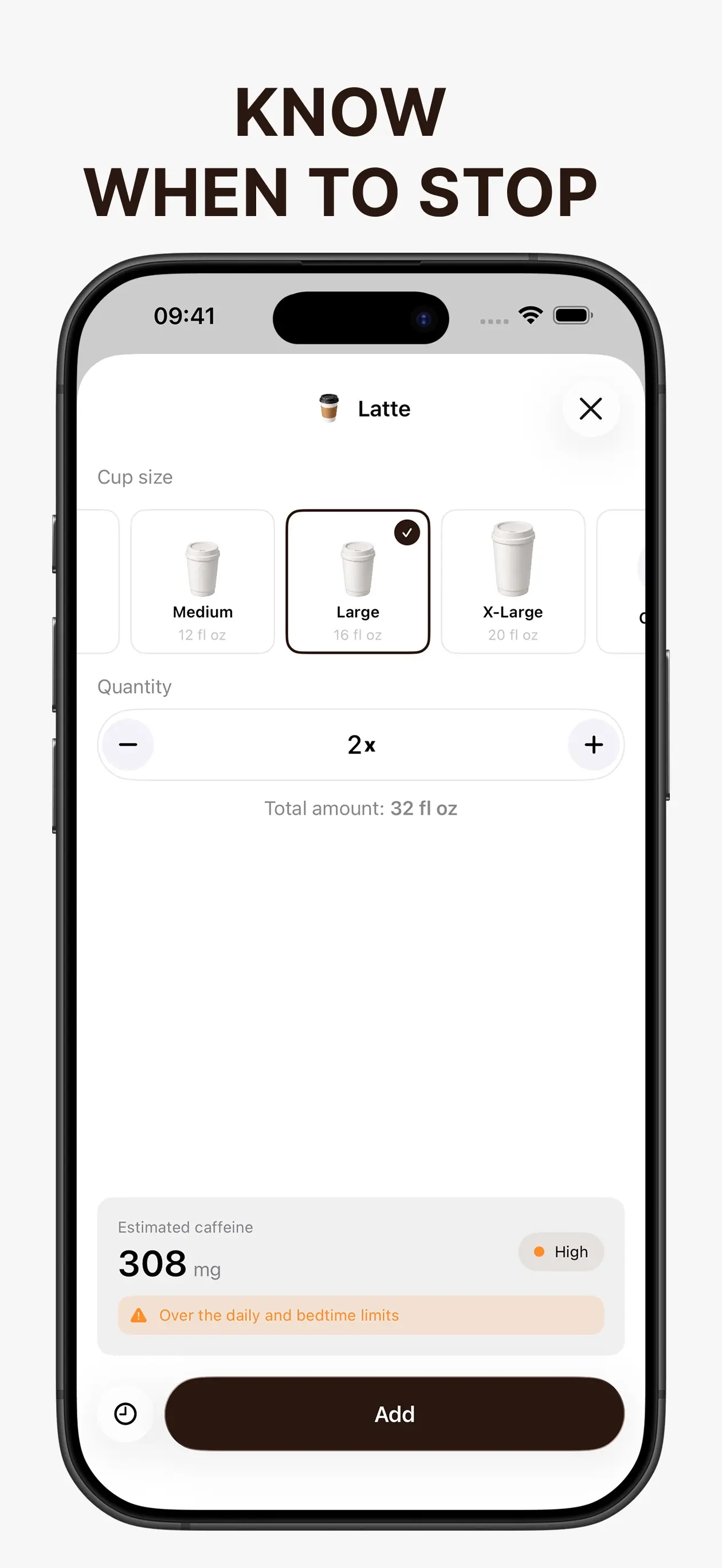
Look for serving sizes you can adjust, a clock time on each entry, and a way to fix mistakes. Recent items help when the same coffee shows up every morning. A custom item matters when the catalog misses your drink.
Treat catalog milligrams as reference values. The FDA notes that caffeine content varies by product, and that restaurants do not have to tell you the amount. If the cup in your hand differs from the menu item, edit the amount.
The estimate should show its assumptions
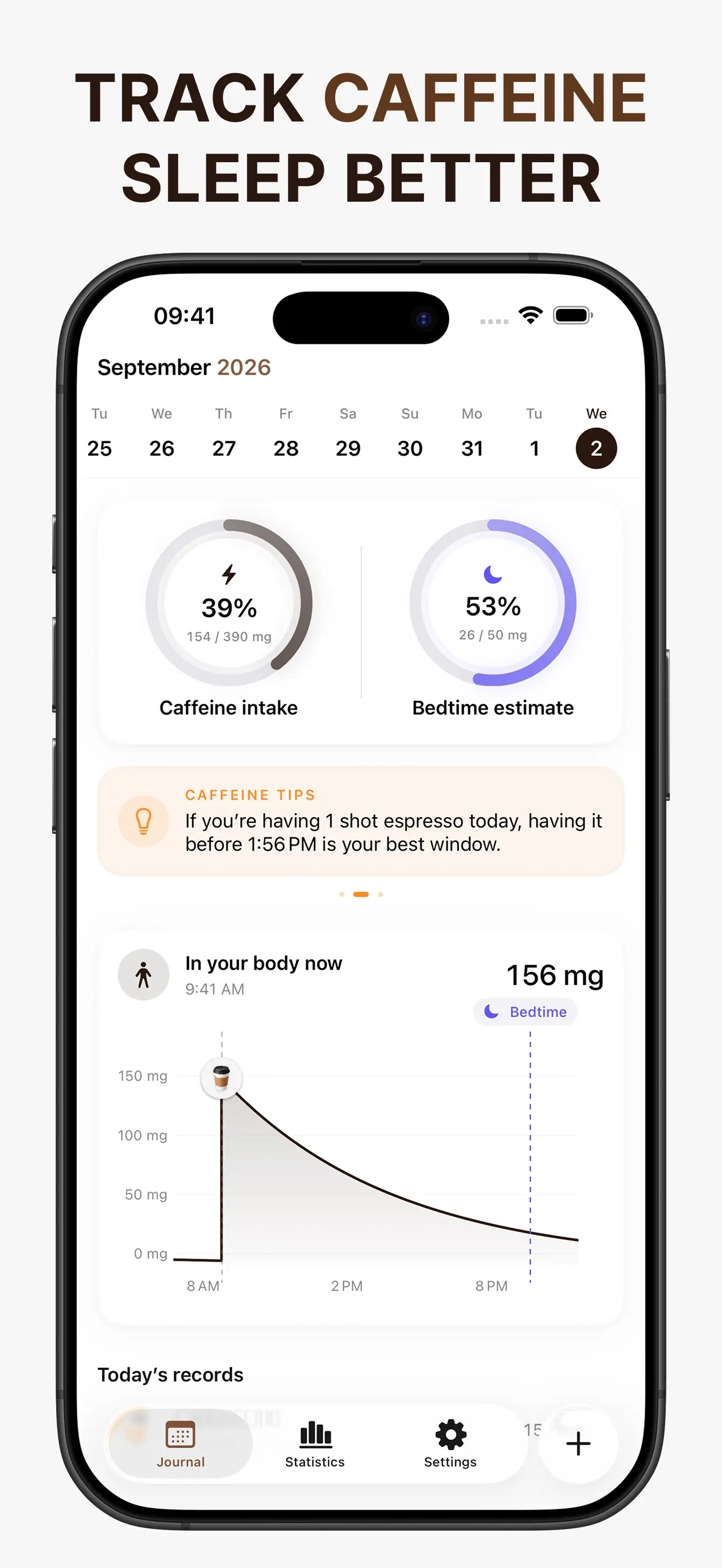
A remaining-caffeine number comes from doses, times, and a half-life. Prefer an app that lets you select the half-life and your usual bedtime, and that lets you inspect the curve at a particular hour.
Keep two targets when both questions matter: a daily total, and a limit for what may remain at bedtime. One combined status hides which of those limits a drink crossed.
Match the app to the job
On-device storage fits when you want the log on your phone without an account. Read the privacy label before you rely on that. An app that says it does not collect data is a different choice from one that syncs sleep or an account.
Sleep stages, Apple Watch logging, barcode scans, and a structured quit plan are separate jobs. If the listing does not include them, plan on doing that work somewhere else.
Using Caffeine Tracker - Kofe
A log and two targets, stored on your iPhone
Caffeine Tracker includes a searchable catalog of more than 2,000 item variations, custom items, a half-life you select, and a usual bedtime. It compares a daily target with a bedtime target and keeps setup details and logs on the device. It does not read Apple Health, track sleep, scan barcodes, or include a quit plan.
- More than 2,000 item variations
- Editable servings and times
- Log stored on the iPhone
If a drink log and a bedtime estimate are the job, add the next drink with its time.


FAQ
Questions about this topic
Do I need a huge drink database?
You need the drinks you actually have, plus a custom entry for the rest. A long catalog helps when the serving sizes can be adjusted.
Should the app connect to Apple Health?
Connect it only if you want sleep or other health data beside the caffeine log. A caffeine log can stand on its own.
Which claim should I ignore?
Ignore any promise that the app measured the caffeine in your bloodstream, or that using it will make you sleep. The useful output is a calculation from what you entered.
Sources and further reading
Keep reading
Related posts
What Caffeine Half-Life Means
Caffeine half-life is the time it takes to clear about half of a dose. In healthy adults the average is about 5 hours, with a range of roughly 1.5 to 9.5 hours.
Read post daily caffeine limit vs caffeine at bedtimeDaily Caffeine Limit vs Caffeine Left at Bedtime
A 400 milligram daily figure and the caffeine still present at bedtime answer different questions. You can stay under the daily total and still drink late.
Read post