
Daily Caffeine Limit vs Caffeine Left at Bedtime
A 400 milligram daily figure and the caffeine still present at bedtime answer different questions. You can stay under the daily total and still drink late.
Short answer
A daily limit adds up what you consume. Caffeine left at bedtime is an estimate of what may remain when you usually go to sleep. You can stay under 400 milligrams and still drink late enough that a meaningful share is left at bedtime.
The longer answer
Both numbers use milligrams, and they do different jobs. The FDA has cited 400 milligrams a day for most adults as an amount not generally associated with negative effects, and it notes that sensitivity and clearance vary widely. That citation is about the day's intake. Sleep also depends on when you had the caffeine, because the body clears it gradually. A useful log shows the running total and a separate bedtime estimate, and it lets you change either target when your situation changes.
What a daily limit is for
A daily target answers how much you had today. The FDA figure of 400 milligrams is a population reference for most adults, not a personal prescription. People who are pregnant, trying to become pregnant, or breastfeeding are told to ask a health care provider whether they need to limit caffeine.
Product amounts vary. Brewed coffee, tea, soft drinks, and energy drinks do not share one caffeine value, and restaurants are not required to disclose the amount in a cup. A daily total built from typical catalog values is still an estimate.
What a bedtime figure is for
A bedtime figure asks how much of today's caffeine the model still has left at the time you usually sleep. An early 300 milligram total can look modest by bedtime. A smaller drink two hours before bed can look minor on the daily total and large on the bedtime estimate.
The estimate depends on the doses, the times, and the half-life you selected. Change the half-life and the bedtime number moves, even when the drinks stay the same.
How to use the two numbers together
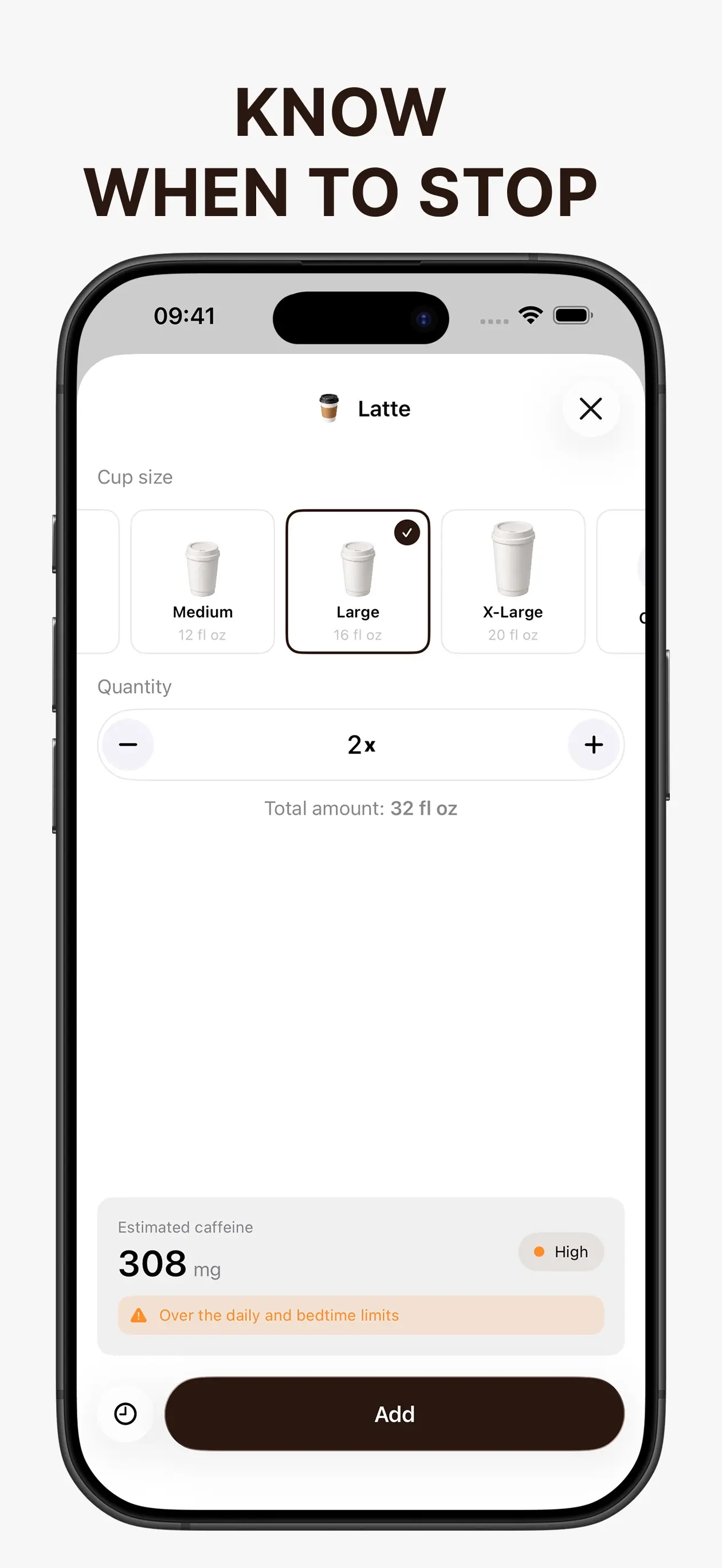
Check the daily total when you want to know whether the day is still inside the limit you chose. Check the bedtime estimate when you are deciding on another serving. A drink can pass one test and fail the other.
If you lower a target later, keep the old entries. The history is what makes the new target meaningful. Deleting the week to tidy the chart removes the comparison you wanted.
Using Caffeine Tracker - Kofe
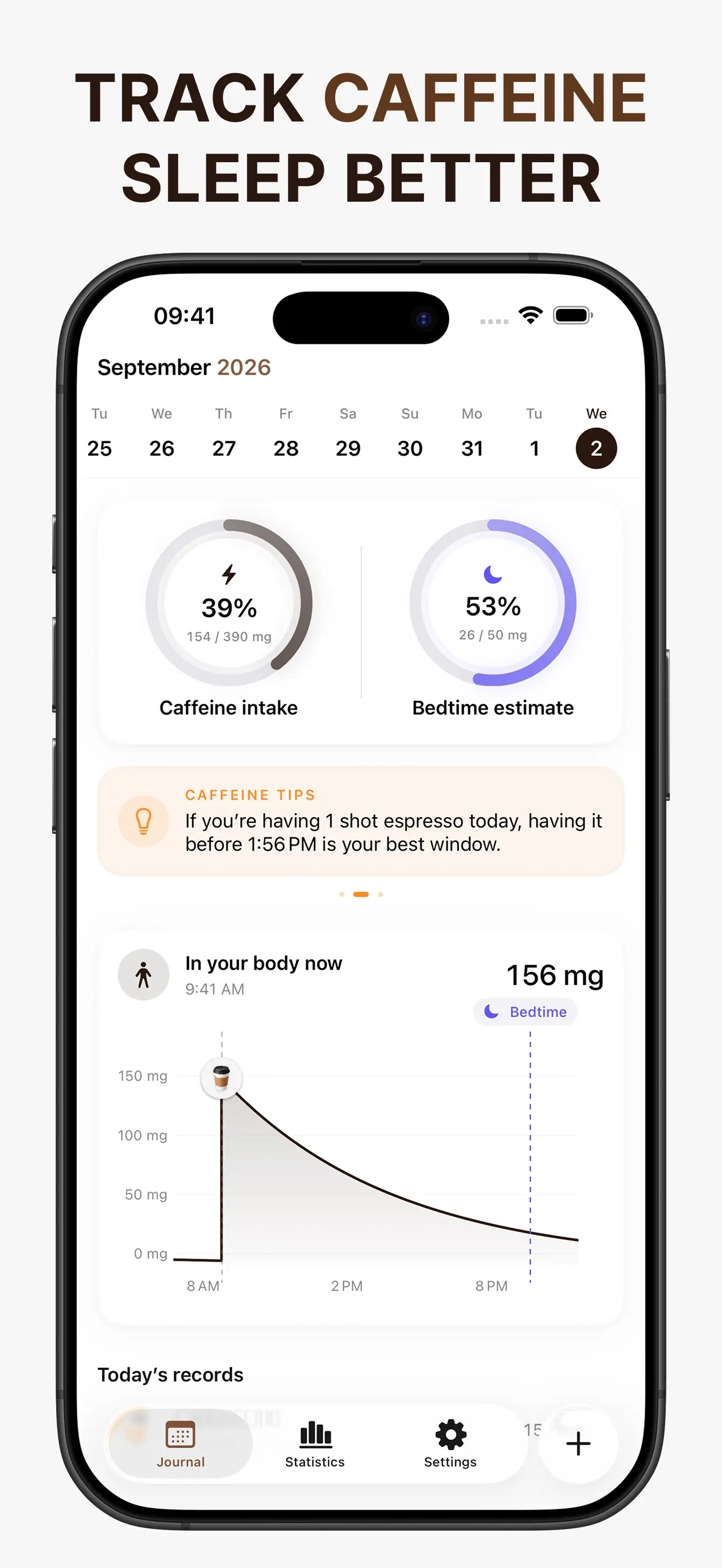
Watch both targets on the home screen
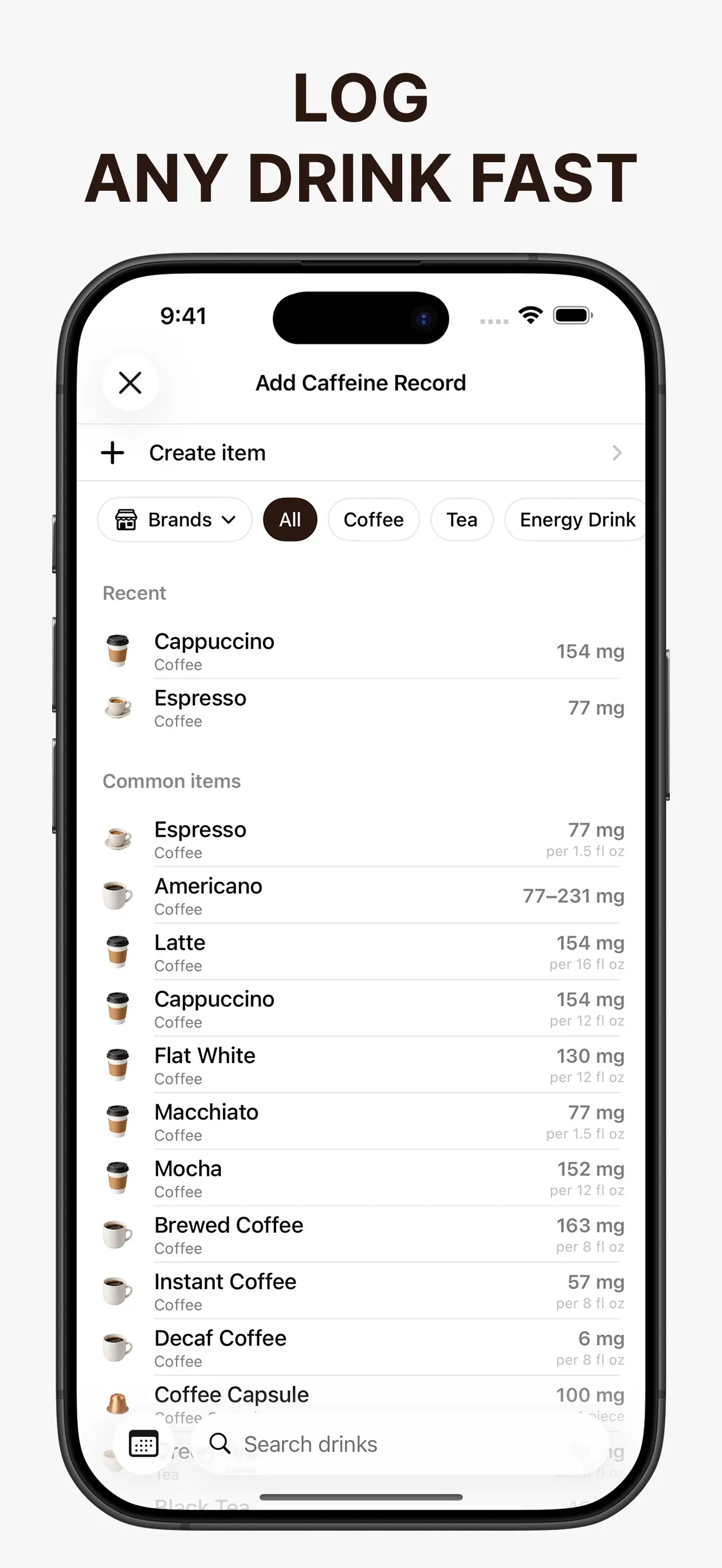
Caffeine Tracker compares caffeine consumed with your daily target and estimated caffeine remaining at bedtime with your bedtime target. During setup it can suggest a daily amount from sensitivity, age, and, where it applies, pregnancy or breastfeeding. You can keep that number or replace it.
- Separate daily and bedtime targets
- Suggested daily amount you can edit
- Journal entries stay when targets change
Set the two targets, log the day, and read each number for the question it answers.


FAQ
Questions about this topic
Is 400 milligrams a bedtime limit?
No. The FDA cites 400 milligrams a day for most adults as an amount not generally associated with negative effects. That is a statement about daily intake, not the last hour before sleep.
Can I be under my daily target and still have a high bedtime estimate?
Yes. A late serving can leave more at bedtime than a larger serving earlier in the day.
Should I copy the FDA figure into an app?
You can use 400 milligrams as a starting daily target if you are a healthy adult and a clinician has not advised otherwise. You can also enter a different number. An in-app suggestion is not a medical order.
Sources and further reading
Keep reading
Related posts
What Caffeine Half-Life Means
Caffeine half-life is the time it takes to clear about half of a dose. In healthy adults the average is about 5 hours, with a range of roughly 1.5 to 9.5 hours.
Read post when to stop caffeine before bedWhen to Stop Caffeine Before Bed
There is no single cutoff for every dose and person. Use your bedtime, the size of the drink, and a study of 400 milligrams taken 6 hours before sleep.
Read post