
What Caffeine Half-Life Means
Caffeine half-life is the time it takes to clear about half of a dose. In healthy adults the average is about 5 hours, with a range of roughly 1.5 to 9.5 hours.
Short answer
Caffeine half-life is the time it takes for the amount in your body to fall by about half. In healthy adults, the average is about 5 hours, and published values run from roughly 1.5 to 9.5 hours. One half-life still leaves about half of that dose behind.
The longer answer
Caffeine leaves the body on a curve. With a 5 hour half-life, a model keeps about half of a dose after 5 hours, about a quarter after 10 hours, and about an eighth after 15 hours. A National Academies review puts the mean half-life in healthy people at about 5 hours, inside a range of about 1.5 to 9.5 hours. Pregnancy, smoking, some medicines, and other factors can move a person's clearance outside that average. Feeling alert and still having caffeine left are separate questions.
What the half-life is counting
Half-life describes elimination. Peak levels can arrive well before half of the dose is gone. The same National Academies review reports peak plasma concentrations between 15 and 120 minutes after you swallow caffeine, depending on the person and what else is in the stomach.
Each later interval removes about half of what remains, so a chart slopes down and then flattens. The line does not hit zero at the first half-life.
Why your number can differ from the average
That review lists pregnancy, oral contraceptives, smoking, altitude, and body weight among the factors that change caffeine metabolism. The FDA makes a related point in plain language: people differ in how sensitive they are to caffeine and in how fast they clear it.
A tracker that asks you to select a half-life is asking for an assumption. If evenings feel wired long after a morning coffee, a longer half-life may describe you better than the average. If caffeine seems to pass quickly, a shorter one may fit better. You can revise the setting when the chart stops matching your experience.
How to read a remaining-caffeine chart
Add every source you care about. Coffee and tea are the obvious ones. The FDA also points to energy drinks, soft drinks, gum, supplements, and other products that are easy to leave out. Decaf coffee still has some caffeine, often about 2 to 15 milligrams in an 8-fluid-ounce cup.
Then read a specific time, such as your usual bedtime, instead of treating the whole curve as a score. The number at that time comes from the doses you logged and the half-life you selected. It can help you compare a 3 p.m. coffee with a 6 p.m. coffee.
Using Caffeine Tracker - Kofe
Chart the half-life you selected
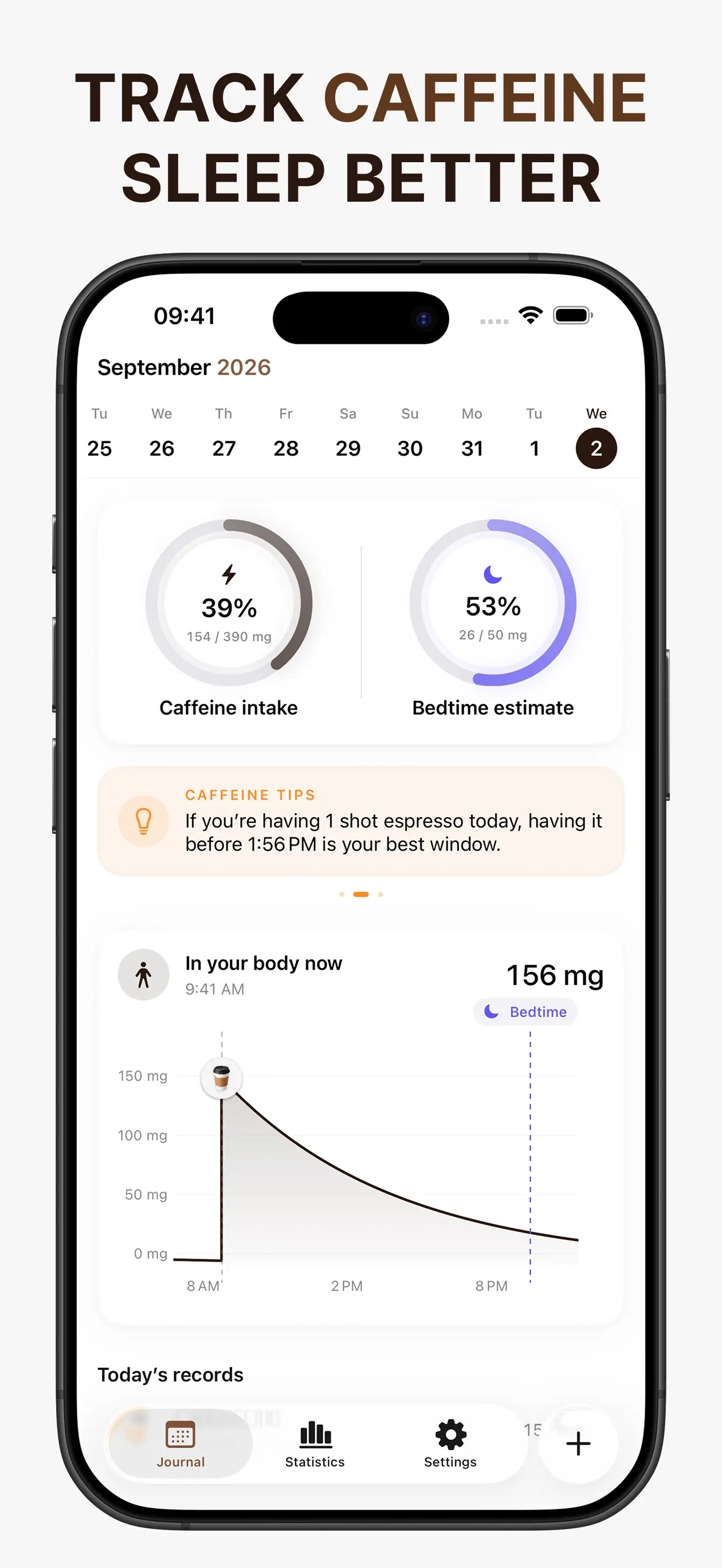
Caffeine Tracker draws an estimated curve from the drinks you log, the half-life you select, and your usual bedtime. You can inspect a point on the chart, including the time around a drink. The result is informational.
- Selectable half-life
- Point-by-point chart
- Bedtime used as the reference time
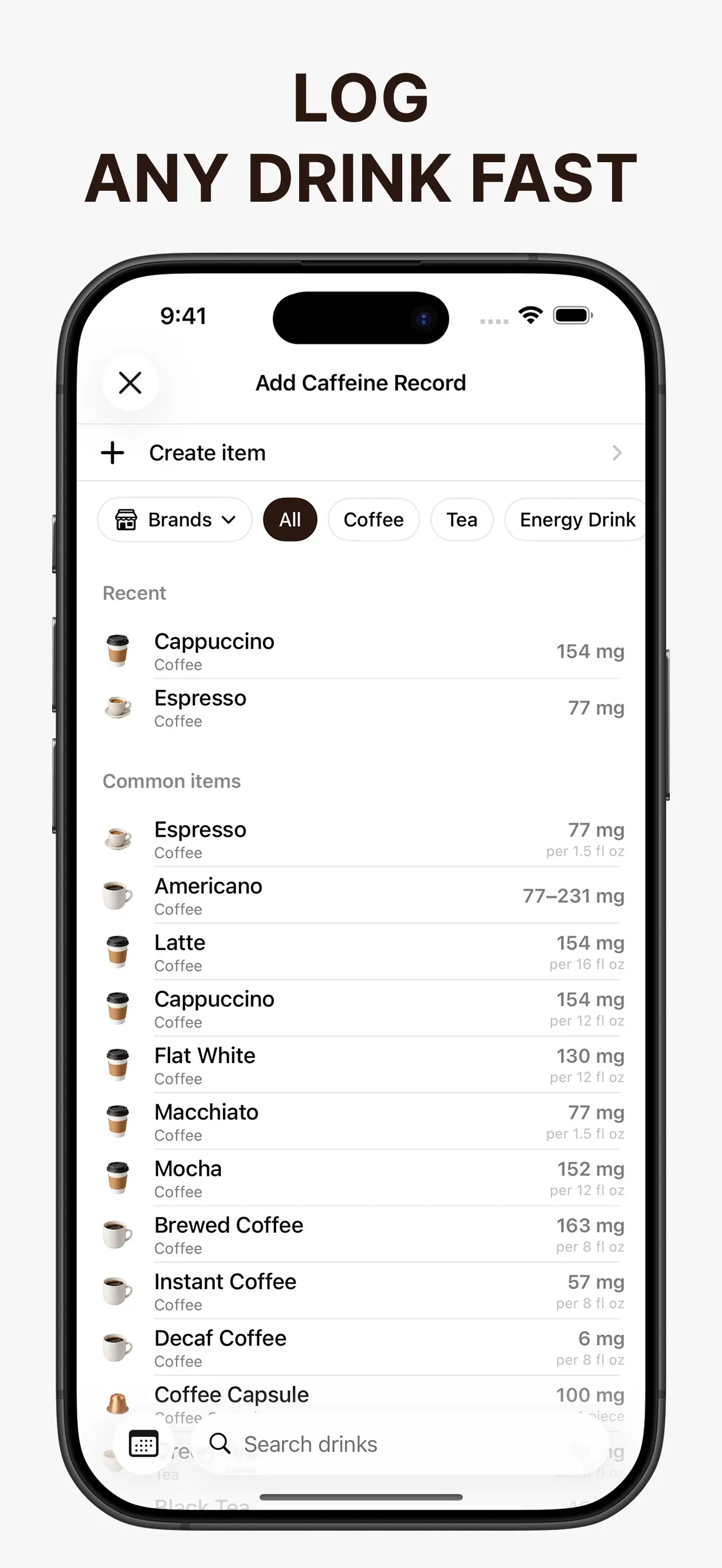
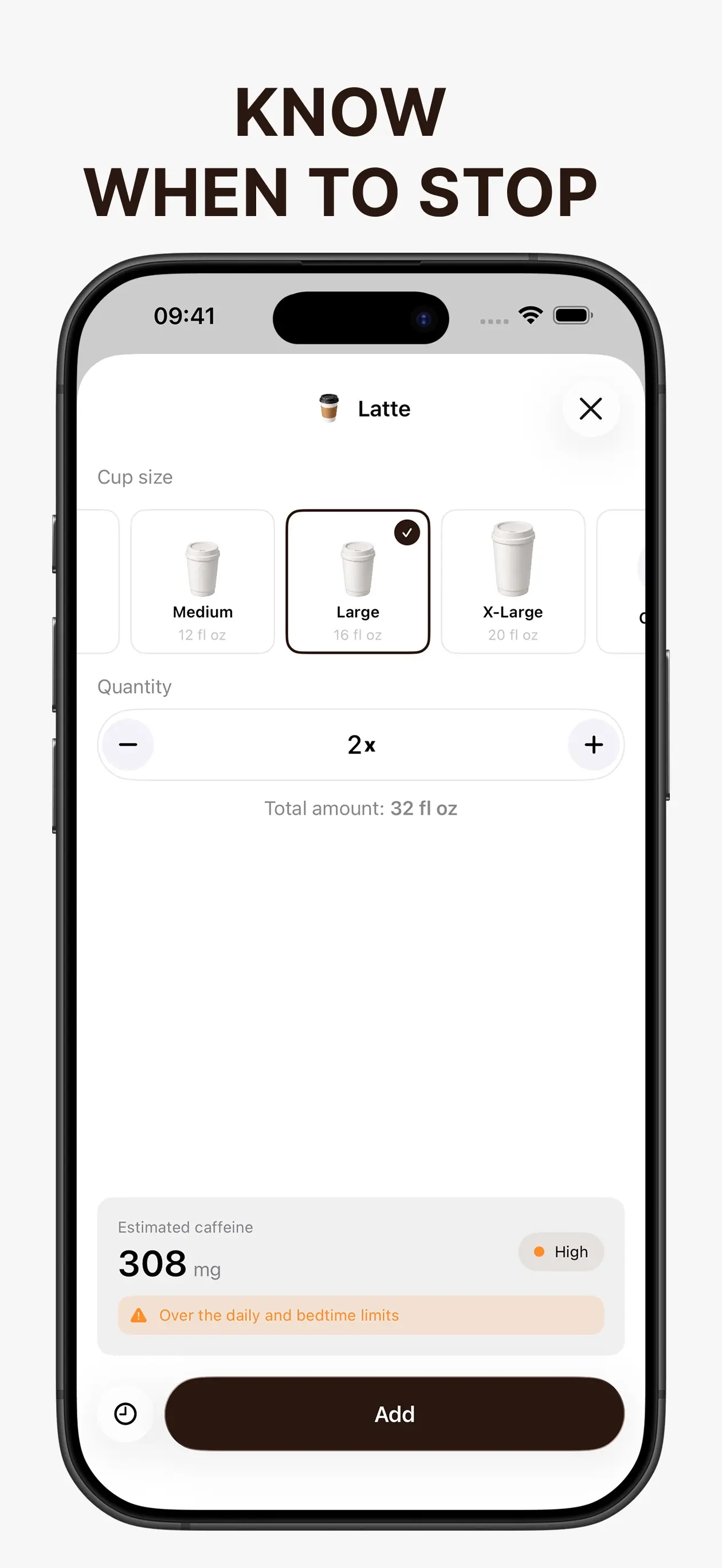
Log the drink, then check the estimate at the hour you usually go to bed.


FAQ
Questions about this topic
Is caffeine gone after one half-life?
No. One half-life leaves about half of that dose. Each following half-life clears about half of what is still left.
Can a phone app measure my half-life?
No. A half-life setting is an assumption you choose. Measuring your own clearance takes clinical testing.
Do small sources belong on the chart?
They can. Gum, soda, supplements, and decaf still add milligrams, and those milligrams follow the same kind of curve.
Sources and further reading
Keep reading
Related posts
When to Stop Caffeine Before Bed
There is no single cutoff for every dose and person. Use your bedtime, the size of the drink, and a study of 400 milligrams taken 6 hours before sleep.
Read post daily caffeine limit vs caffeine at bedtimeDaily Caffeine Limit vs Caffeine Left at Bedtime
A 400 milligram daily figure and the caffeine still present at bedtime answer different questions. You can stay under the daily total and still drink late.
Read post